


What Does GEO Actually Mean?
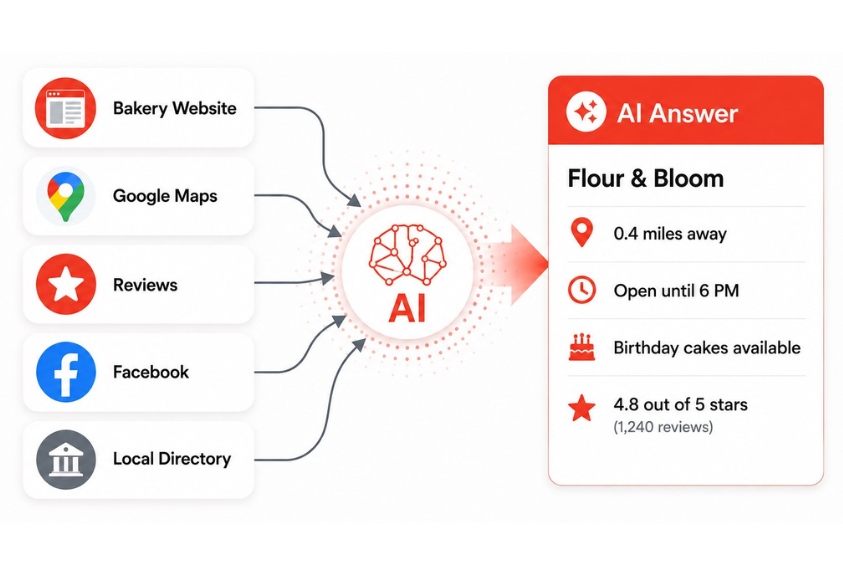
If you've heard someone mention "GEO" lately and wondered whether you missed a memo, you didn't. It's a newer term, and most explanations of it are written for marketers, not for the general public.
Here's the short version: GEO stands for Generative Engine Optimization. It's the practice of making sure AI tools like ChatGPT, Claude and Perplexity can find your business, understand what you do and mention you when someone asks a relevant question.
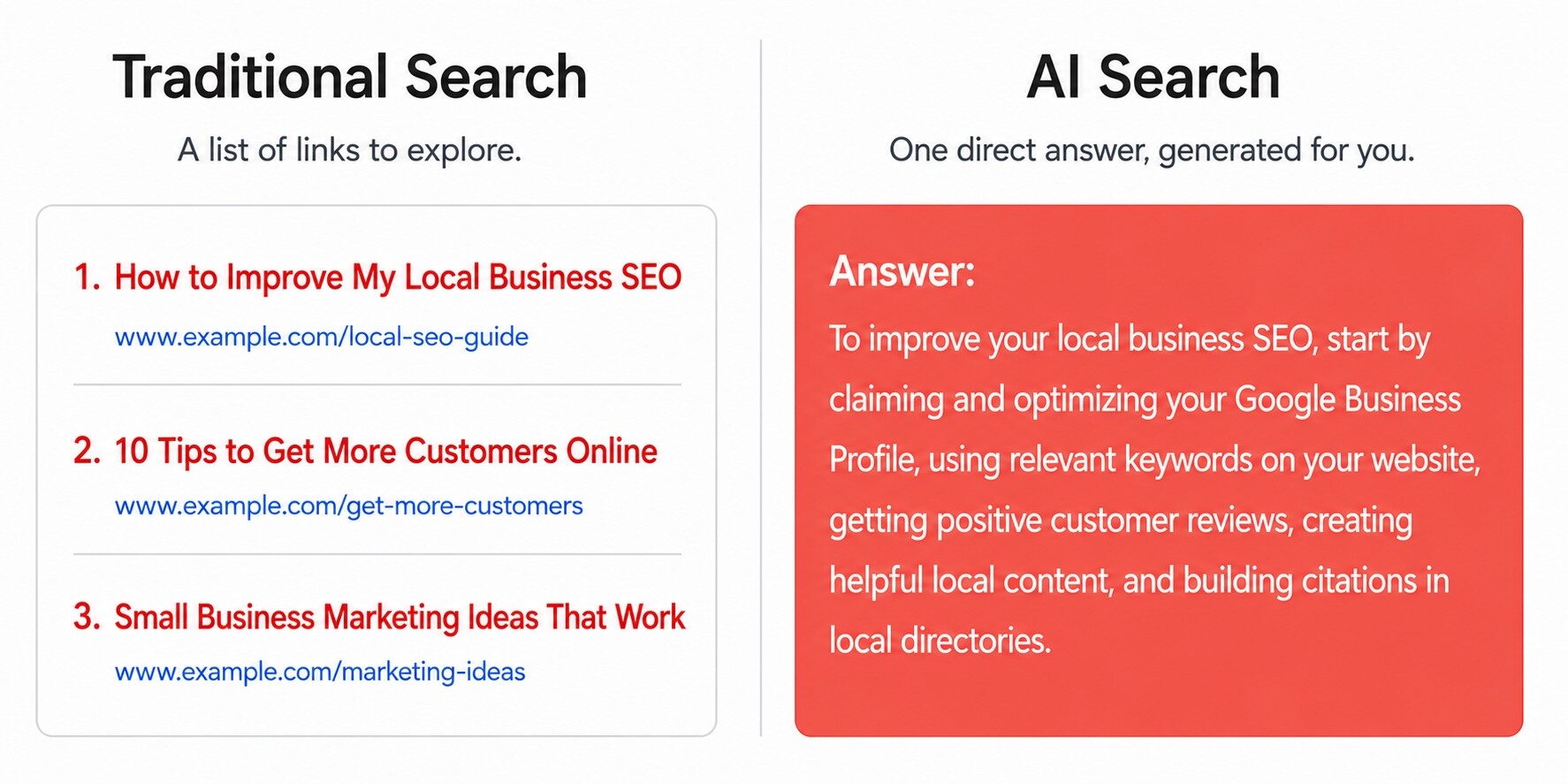
Think of it as the SEO you already know, but for a search experience where there's no list of blue links to scroll through. Just one answer and you either made the cut or you didn't.
Why the Shift to AI Answers Matters
Where traditional SEO earns you a spot in a list of search results, GEO earns you a mention inside an answer, built by structuring your website's content so AI platforms can read it, trust it and quote it back to someone asking a question.
The shift matters because more people are skipping the search results page entirely. A 2026 study from SparkToro found that 68% of U.S. Google searches now end without a single click to any website. They're asking an AI assistant directly: "what's a good caterer near me?" or "where can I board my dog for the week?" They're getting a short, direct answer instead of a list of links to click through.
How GEO Is Different From Traditional SEO
Traditional SEO still rewards search-intent-based keywords, backlinks and technical health. All of that is still worth doing right. GEO layers clarity, structure and depth on top of those fundamentals.
AI models tend to favor content that:
-
Answers a specific question directly, near the top of the page
-
Uses clear headings that match how people actually ask questions
-
Backs up claims with real, checkable specifics instead of vague promises
-
Shows who's behind the content and why they're qualified to say it
GEO Builds on SEO
GEO builds on SEO. A site with weak technical SEO (slow load times, poor structure, thin content) will struggle in both traditional search and AI answers. GEO tends to work best when the SEO fundamentals are already solid.
GEO vs. AEO vs. AIO: Sorting Out the Alphabet Soup
If you've seen GEO, AEO and AIO tossed around like they mean the same thing, that confusion is fair. The industry hasn't settled on where one term ends and the next begins, and even people who work in this space use the terms inconsistently. (🖐 Guilty on occasion.)
Here's a working breakdown:
-
GEO (Generative Engine Optimization) is about getting cited or mentioned inside an AI-generated answer: the actual paragraph ChatGPT or Perplexity writes back to someone.
-
AEO (Answer Engine Optimization) grew out of an older idea: writing content structured to directly answer a question, so it can be lifted whole into a featured snippet, a voice assistant reply or an AI answer.
-
AIO gets used two different ways depending on who's talking. Sometimes it's shorthand for "AI Optimization" as a broad umbrella covering SEO, AEO and GEO together. Other times, people use it almost interchangeably with GEO, just under a different name.
In practice, the three overlap heavily, and the actual work looks the same either way: clear answers near the top, real FAQs, fresh content and demonstrated expertise get you cited no matter which term you use.
The label matters less than the content itself. Make it clear enough that any of these systems can use it.

What This Looks Like in Practice
Example: a small bakery with a nice-looking website. Someone in town asks ChatGPT, "what's a good bakery for a birthday cake near me?" The site never actually states what kind of cakes it makes or how far in advance to order, so there's nothing for the AI to confidently repeat back. Good photos don't answer that question.
Now suppose the same bakery adds one clear paragraph covering what kinds of cakes they make and their standard lead time for custom orders. That's a direct answer sitting where an AI, and a human skimming on their phone, can find it fast.
How to Tell If Your Site Is Ready
A quick gut check: pick five questions a potential customer might actually ask about your business. Then read your own homepage and service pages and ask yourself honestly: does the page answer any of these in the first few sentences, in plain language? If the honest answer is "not really," that's just the starting point.
This is also where a real technical SEO review earns its keep, checking whether the site's structure, speed and content depth give AI tools (and human visitors) something solid to work with.
Want Help Figuring Out Where You Stand?
If you're not sure whether your site would hold up if someone asked an AI about your business, that's exactly what a technical SEO review is for. Let's take a look together and find out what's actually there and what's missing.
