


What is Artificial Intelligence? A Simple Guide for Businesses

Artificial intelligence. It’s a term that's popping up in headlines, boardrooms and, really, practically everywhere you turn nowadays. But what is it, really? And more importantly, what should business owners, marketers and everyday curious minds know about it?
At Eternity, we know technology can feel intimidating. That’s why we believe in clear, friendly guidance that empowers you to understand and confidently engage with new tools, including AI. Whether you’re a digital novice or just looking to better navigate the changing world of tech, this guide is designed to meet you where you are.
Let’s break down what AI is, how it works and why it matters for your business.
What Is Artificial Intelligence?
At its core, artificial intelligence (AI) is a field of computer science focused on creating machines that can perform tasks typically requiring human intelligence. That includes things like problem-solving, recognizing speech or images, learning from data and even making decisions.
In simplier terms, AI is a supercharged assistant that can mimic human logic — but with super-speed and zero need for caffeine. It learns, analyzes and helps you tackle work faster.
A Simple Analogy
Think of a traditional calculator. You give it an exact input (like “2 + 2”), and it gives you the exact answer it was programmed to provide. It doesn’t learn or change; it's just following instructions.
Now, imagine AI as a smart assistant that learns from experience. If you ask it to recommend a new movie, it doesn't just pull a random title. It looks at what you’ve liked before, what’s trending and even what time of day you usually watch. The more you use it, the better it gets at helping you.
That’s the big difference: regular software follows rules. AI learns the rules.
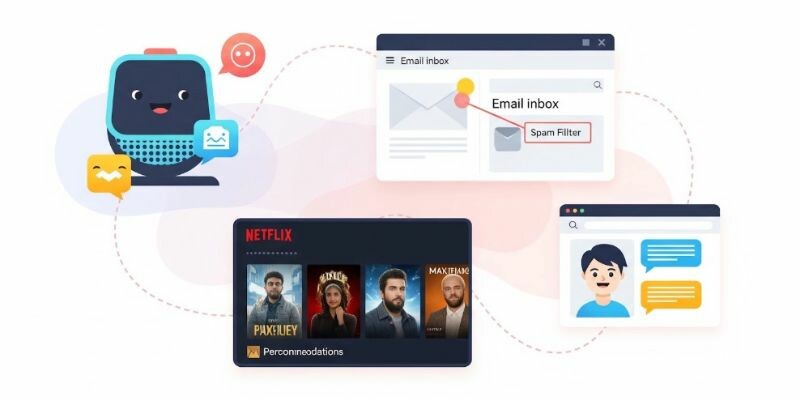
Types of AI You’re Already Using
You might be surprised to learn that you’re interacting with AI all the time. Here are a few common examples:
- Voice assistants like Siri, Alexa, or Google Assistant
- Email filters that catch spam or prioritize your inbox
- Netflix recommendations based on your viewing habits
- Chatbots that help with customer service on websites
How Does AI Work?
Now that we know AI mimics human learning using data and algorithms, let’s look at what actually happens behind the scenes — and why it matters for your business.
Step 1: AI Needs a Problem to Solve
Every good AI system starts with a goal, like:
- Sorting customer emails by topic
- Recommending blog content based on user behavior
- Predicting which product a shopper will want next
The more specific the problem, the better the AI can be trained to solve it.
Step 2: It Learns from Patterns in Data
AI systems “train” by studying large amounts of relevant data — emails, purchase histories, chat logs, images, etc. Rather than memorize facts, AI looks for patterns — like how people shop, search or speak — and learns from them.
This training phase builds the foundation for how the system will recognize and react to similar situations in the future.
Step 3: The Model Gets Smarter Over Time
Once trained, AI uses its model to make predictions — this could mean answering a customer question, filtering spam or adjusting a marketing campaign in real time.
The best part? Many AI systems improve the more they’re used. With ongoing feedback (like clicks, corrections or performance data), the model adapts, gets more accurate and adds more value over time.
Bottom Line on AI for Small Business
AI doesn’t replace human thinking — it amplifies it. When used with clear goals and good data, AI can help small businesses save time, reduce guesswork and make smarter decisions faster.

Key AI Technologies You Should Know
AI isn't one single thing — it’s powered by a range of technologies working behind the scenes. Here are three you’re probably interacting with every day:
🧠 Machine Learning (ML)
Machine learning is the engine behind most modern AI systems. It teaches computers to recognize patterns in data and make decisions based on those patterns — without being explicitly programmed for every scenario. For example, ML powers email spam filters, sales forecasting and customer behavior predictions.
💬 Natural Language Processing (NLP)
NLP helps machines understand and respond to human language. It’s what allows AI to interpret text, speech and even sentiment in emails, chats or reviews. Tools like ChatGPT, Grammarly and customer service bots all rely on NLP to communicate like (or with) humans.
👀 Computer Vision
Computer vision allows AI to interpret visual information — like photos, video and real-world environments. It’s used in everything from facial recognition to self-checkout systems and even medical image analysis. For small businesses, it can help with inventory tracking, security and quality control.
Each of these areas supports different applications, from writing assistance to product recommendations.
Want to Go Deeper?
Not sure what terms like "LLM" or "hallucination" actually mean? Download our free, beginner-friendly AI glossary to brush up on the basics!

Why AI Matters for Your Business
AI isn’t just for tech giants. Businesses of all sizes are already benefiting in areas like:
- Marketing: AI tools can help create content, predict trends and automate email campaigns.
- Customer Support: Chatbots and help desk automation speed up response times and improve experiences.
- SEO: Use AI to analyze content and improve rankings.
- Web Design: AI can streamline testing and personalization, making your site smarter and more user-friendly.
Explore Our AI Consulting Services
From workshops to hands-on guidance, we'll help you use AI with strategy and heart.

What AI Can’t Do (Yet)
Despite all its buzz, AI still has limits:
- It lacks human judgment and emotional intelligence.
- It’s only as good as the data it’s trained on.
- It needs human oversight to ensure fairness, accuracy and alignment with your values.
In short: AI is a tool, not a replacement for your expertise or intuition.
How to Start Using AI the Right Way
You don’t need to be a coder to get started. Here are a few ways to begin:
- Try a content assistant like ChatGPT or Jasper for writing drafts or brainstorming.
- Use AI in marketing tools like Mailchimp, HubSpot or Canva, many now offer AI-powered features.
- Talk to a pro. Eternity's AI workshops and consulting will help you understand what's worth investing in and what’s just hype.
The key is to start small, stay curious and choose tools that align with your goals.

Final Thoughts
We believe tech should serve people, not the other way around. As artificial intelligence becomes more integrated into our daily lives, we’re here to help you navigate it with wisdom, warmth and a human touch.
Overwhelmed by AI Options?
Let’s make sense of it together.
In just 20 minutes, we’ll help you:
- Identify real opportunities for AI in your business
- Avoid hype, overwhelm and wasted effort
- Walk away with 2–3 personalized, actionable ideas
Book Your Free Strategy Call
(No pressure. Just smart, honest guidance.)
